




Category: Health Academy
Core Research Direction: What an NNLM/MedlinePlus tutorial series offers community health workers for finding and evaluating trustworthy consumer health information, and what it cannot establish about downstream client outcomes
Search Intent: What do the NNLM Region 5 MedlinePlus tutorials for community health workers cover, and what evidence exists about whether such trainings actually change practice or health outcomes?
Platform: SANYUN Science Center
Evidence reviewed through: 2026-11-07
Executive Summary
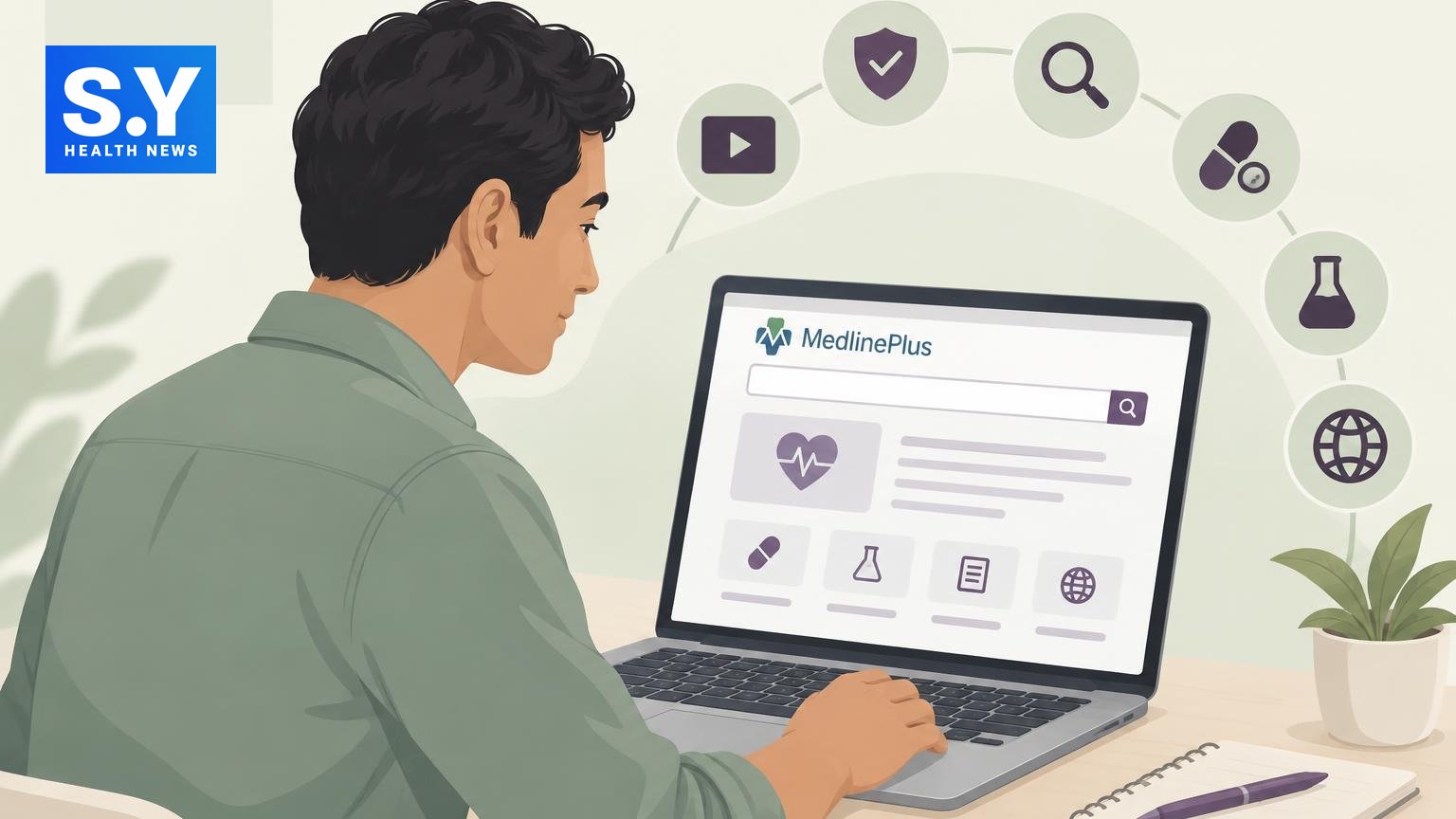
The Network of the National Library of Medicine (NNLM) Region 5 worked with The Next Door to produce seven short video tutorials that teach community health workers the basics of using MedlinePlus, a public-facing health information website. The series covers what MedlinePlus is, how to judge whether health information is trustworthy, how to search, how to use the search box, how to find drug, supplement and herb information, how to find medical test information, and how to view content in multiple languages.[1][2]
The videos run from just over 4 minutes to just over 8 minutes and each includes closed captioning and a written transcript. The resource page lists learning objectives, but these are planned goals rather than measured achievements. Neither source reports how many community health workers completed the series, what they learned, how they used it with clients, or whether client health information skills or health outcomes changed. The series is therefore best understood as an educational resource with a clear design rationale, not as evidence that training changes practice.
Why This Matters
Community health workers often sit between health systems and people who face language, literacy, cost or trust barriers to health information. When a client asks whether a supplement is safe, what a lab test means, or where to read about a condition in their own language, the worker needs a source that is reliable and usable in a short encounter. MedlinePlus is described as providing information on a wide range of health topics for the public, which makes it a plausible default referral destination for such conversations.
A tutorial series aimed at community health workers addresses a practical gap: knowing that a trustworthy website exists is different from being able to navigate it quickly, recognize its limits, and help someone else use it. The NNLM series is structured around that gap, with topics that map onto common client questions. The harder question, and the one the supplied sources leave open, is whether watching short videos actually changes what workers do in the field or what clients ultimately understand.
What the Tutorial Series Covers
The series contains seven tutorials. The first introduces MedlinePlus as a health information resource. The second addresses how to evaluate whether health information is trustworthy. The third covers searching for health information on MedlinePlus, and the fourth focuses specifically on how to best use the search box. The fifth covers finding information about drugs, supplements and herbs; the sixth covers medical tests; and the seventh explains how to view MedlinePlus information in multiple languages.
| Tutorial topic | Listed runtime | What the source states |
|---|---|---|
| Learn about MedlinePlus | 6:44 | Introduces the resource and its role as a public health information website |
| Evaluate whether health information is trustworthy | 2:43 | Shortest listed video; addresses trust evaluation |
| Searching for health information | 7:13 | Covers searching on MedlinePlus |
| Using the search box | 4:14 | Focuses on search box technique |
| Drugs, supplements and herbs | 8:06 | Longest listed video; covers finding product information |
| Medical tests | 5:51 | Covers finding medical test information |
| Multiple languages | 4:52 | Explains viewing MedlinePlus content in multiple languages |
The runtimes suggest a deliberate short-format design. The trust-evaluation video is the shortest at 2:43, while the drugs, supplements and herbs video is the longest at 8:06. This distribution may reflect the practical complexity of navigating product information rather than any judgment about topic importance; the sources do not explain the rationale. What can be said is that the entire series fits within roughly the time of a single short continuing-education session, which lowers the scheduling barrier for workers with limited release time.
Accessibility and Design Choices
Each video includes closed captioning and a written transcript. These features matter for a workforce that may include people with hearing impairments, people who read more comfortably than they listen in English, and people who want to review steps after a session. The source describes the videos as short and easy to follow, and the transcripts make the content searchable and skimmable in a way that video alone is not.
The project involved The Next Door, Inc. of The Dalles, Oregon, particularly its Equity and Outreach Training Services staff, who contributed time and expertise. The source's acknowledgment notes the organization's work promoting culturally appropriate health services and education for the Latino community. That partnership is a design credential, not an outcome measure: it suggests the content was shaped with community-facing expertise, but it does not document how the videos were tested with learners or whether the framing worked for the intended audiences.
The tutorials were funded by the National Library of Medicine, National Institutes of Health, under cooperative agreement UG4LM013725 with the University of Washington. The authors state that content is solely their responsibility and does not necessarily represent official NIH views. Federal funding signals support for development and dissemination; it does not constitute an effectiveness finding, and the disclaimer explicitly separates the material from any implied federal endorsement.
Stated Learning Objectives Versus Measured Outcomes
The resource page lists three learning objectives: explain why MedlinePlus is a reliable website for health information, show specific features on MedlinePlus, and use MedlinePlus to find information on various health topics. These are planned educational goals. They describe what the designers intend learners to be able to do, not what any group of learners was observed doing after the training.
This distinction is central to reading the series honestly. An objective such as 'explain why MedlinePlus is reliable' implies a content area, but it does not establish that viewers can articulate the reasoning, apply it to an unfamiliar website, or recognize when MedlinePlus itself is not the right source for a question. Similarly, 'use MedlinePlus to find information' does not specify accuracy, speed, or the ability to judge whether a retrieved page fits a client's reading level or language preference.
The source does not report completion counts, pre/post knowledge scores, observed search tasks, or follow-up surveys. It also does not report client-level outcomes such as whether clients acted on information, discussed it with a clinician, or experienced any health change. Those absences are not flaws in the tutorial itself; they mark the boundary between a program description and an evaluation study.
What Related CHW Training Evaluations Can and Cannot Tell Us
Broader literature on community health worker training offers a comparison point, with important caveats. A resource index summarizes several evaluations of research-focused training for community health workers and promotoras. In one mixed-methods evaluation, a peer-led research best-practices training was delivered at four additional sites to 42 community health workers and promotoras, and staff at participating organizations found the training useful, suitable and practical to deliver. That is a feasibility finding from a small group, not evidence about client outcomes, and the available summary provides no comparison group or effect sizes.[3]
Another summarized evaluation reports that 394 community health workers and promotoras completed a peer-led research best-practices training, with over 95% self-reporting improved skills and 98% finding it relevant and useful. These are self-reported satisfaction and perceived-skill figures without a comparison group or objective skill measurement described in the summary. They suggest that trained workers perceive value, which is a reasonable early signal, but perception is not the same as demonstrated competence or changed field practice.
A 12-hour 'Fundamentals of Health Research' course covered research basics, ethics and plain-language communication, and many community health workers reported greater confidence and greater likelihood of supporting research afterward. Again, the reported outcomes are confidence and intention; the summary gives no denominator for 'many' and no behavior measure. A separate promotores program summary states that trained community health workers were as successful as clinic-based recruitment in enrolling Hispanic and Latino participants into Alzheimer's research and that their understanding of research and brain health improved, but the index snippet provides no numbers, design details or citation that would allow verification.
These related trainings differ in subject matter from the MedlinePlus tutorials: they focus on research participation and research literacy, not on finding and evaluating consumer health information. Their relevance is methodological. They show that CHW training evaluations commonly rely on self-reported satisfaction, perceived skill and confidence, and that even those evaluations often use small samples or modest designs. For the MedlinePlus series, the supplied sources do not report even these self-reported learner measures, so the evidence base is thinner than the comparison literature.
Interpretation and Limitations
The main limitation is evidence type. Both primary sources are program descriptions: a blog post announcing the series and a resource page listing its contents and objectives. Neither reports a study design, sample, comparison condition, measured outcomes or follow-up. The article therefore cannot conclude that the tutorials improve health literacy, change referral behavior, increase appropriate MedlinePlus use, or affect client health. It can only describe what the series contains and what its designers say it is meant to achieve.
A second limitation concerns currency and versioning. The blog post announcing the series dates to December 2023. The resource page shows a last-updated timestamp of 06/05/26, but that timestamp applies to the web page and not necessarily to the video content. Runtimes listed on the page are one indication that the videos exist in a specific form, but the sources do not describe a content-review process or a schedule for updating the videos as MedlinePlus itself changes. Readers should treat the series as a stable educational resource while recognizing that its examples and interface walkthroughs may age.
A third limitation is audience fit. The series targets community health workers, and the partnership with an organization serving the Latino community suggests attention to culturally appropriate services, but the sources do not report learner demographics, languages used during training, or whether the tutorials were tested with workers whose clients speak languages other than English. The multiple-languages tutorial exists, which is a design feature, but access to translated MedlinePlus content is not the same as a tested multilingual training pathway.
Finally, trust evaluation is complex. The series devotes one short video, at 2:43 the briefest in the set, to evaluating whether health information is trustworthy. A short format may be appropriate for introducing a checklist or a set of questions, but the source does not describe what criteria are taught or whether learners practice applying them. No conclusion can be drawn about whether a viewer could distinguish a trustworthy site from a plausible but unreliable one after watching.
Research Outlook
The natural next step for this program would be a structured evaluation. Useful questions include how many community health workers start and complete the series, whether knowledge and search-task performance improve from pre- to post-training, whether workers report using MedlinePlus with clients weeks later, and whether clients report better understanding or follow-through. None of those data are reported in the supplied sources, and this review does not claim they were collected.
Evaluation design matters as much as data collection. Satisfaction surveys and self-reported confidence are common in CHW training evaluations, as the related literature illustrates, but they are weak proxies for competence and practice change. A stronger design would include an objective search task scored against a rubric, a comparison with workers who received written instructions only, and a follow-up measure of actual referral or information-sharing behavior. Those are proposed directions, not observed features of the NNLM series.
Key Takeaways
- NNLM Region 5, with The Next Door, produced seven short video tutorials on using MedlinePlus for community health workers, each with closed captioning and a transcript.
- Topics include trust evaluation, searching, the search box, drugs and supplements, medical tests and multiple languages; listed runtimes range from 2:43 to 8:06.
- The resource page states learning objectives, but these are planned goals, not measured learning outcomes.
- No source provided reports completion, knowledge change, practice change or client outcomes for this series, so effectiveness remains untested here.
- Related CHW training evaluations rely mainly on self-reported satisfaction and confidence, often with small samples; they illustrate evaluation approaches rather than establish outcomes for the MedlinePlus tutorials.
Questions and Answers
What do the NNLM MedlinePlus tutorials for community health workers cover?
The seven-video series introduces MedlinePlus as a public health information resource, explains how to evaluate whether health information is trustworthy, shows how to search and use the search box, covers finding information about drugs, supplements and herbs and about medical tests, and explains how to view MedlinePlus content in multiple languages. Each video includes captioning and a transcript, and listed runtimes range from 2:43 to 8:06.
Do the MedlinePlus community health worker tutorials have published evidence that they improve practice or health outcomes?
No such evidence is reported in the supplied sources. The blog announcement and resource page describe the series and its learning objectives but provide no study design, sample, completion data, knowledge scores, practice measures or client outcomes. The stated objectives are planned goals, not measured achievements. Claims that the tutorials change worker behavior or client health would therefore be unsupported by these sources.
How strong is the evidence from related community health worker research training evaluations?
The available summaries describe mostly self-reported satisfaction and perceived skill. One evaluation reported 394 completers, with over 95% self-reporting improved skills and 98% finding the training relevant and useful; another mixed-methods evaluation trained 42 workers at four sites and reported organizational staff found it feasible. These are early signals without comparison groups or objective skill measures in the summaries, and they concern research training rather than MedlinePlus information skills.
Who are the MedlinePlus tutorials designed for, and are they accessible?
The tutorials are designed for community health workers, with The Next Door's Equity and Outreach Training Services staff contributing expertise from work with the Latino community. Each of the seven videos includes closed captioning and a written transcript, which supports learners who prefer reading, review steps after a session, or have hearing impairments. The sources do not report learner demographics or whether the tutorials were formally tested with multilingual audiences.
What are the limitations of the NNLM MedlinePlus tutorial program description?
The sources are a 2023 blog announcement and a resource page, not an evaluation. They do not report enrollment, completion, knowledge change, search-task performance, practice change or client outcomes. The page's last-updated timestamp applies to the webpage and not necessarily to video content. A trust-evaluation topic receives only a 2:43 video, and the sources do not describe what criteria are taught or whether learners practice applying them.
How should a community health worker or clinic interpret the MedlinePlus tutorial series?
It is reasonable to treat the series as a free, short, captioned orientation to a public health information website, useful for individual learning or onboarding. It should not be described as a proven intervention. Organizations considering it could pair it with local practice tasks and their own follow-up measures, while recognizing that the supplied sources provide no evidence that viewing the videos changes client information seeking or health.
Sources and References
- Carolyn Martin. MedlinePlus Tutorials for Community Health Workers. 2023
- MedlinePlus Tutorials for Community Health Workers.
- Research.
SANYUN Science Center explains published research on men's reproductive and sexual health, connecting scientific evidence with everyday questions while making sources and limitations clear.
Disclaimer: This article is for scientific education and research communication only. It does not provide medical advice, diagnosis, or individualized treatment recommendations, and does not endorse any medication, supplement, device, penile enlargement procedure, or other intervention. Decisions about sexual and reproductive health should be made in consultation with a qualified healthcare professional. Do not delay seeking professional care because of information in this article.
Original Content & Copyright Notice
- This article is prepared for SANYUN Science Center, drawing on published research and publicly available academic literature on men’s sexual and reproductive health. Its editorial explanations and presentation are developed for this platform.
- Copyright in the original editorial content, selection, and arrangement is reserved by SANYUN Science Center to the extent protected by applicable law. Referenced research, quotations, and third-party materials remain subject to the rights of their respective owners. This notice does not claim ownership of scientific facts or third-party research.
- Except where permitted by applicable law or an applicable license, prior written permission is required to reproduce, republish, translate, adapt, redistribute, or commercially reuse protected content. Attribution alone does not grant permission for such reuse.
- For permitted quotation or authorized reuse, clearly identify the source and retain a link to the original article.
- Source: SANYUN Science Center
- Original URL: Retain the original article URL on science.san-yun.com.
- Copyright Holder: SANYUN Science Center, for its own protected editorial content.
- Quotation, excerpts, or authorized reuse must not distort the scientific meaning, omit material limitations or disclaimers, or imply unverified medical claims, product efficacy, or endorsement by SANYUN Science Center.



