




Category: Health Academy
Core Research Direction: Explaining what a semen analysis measures, why results fluctuate between samples, and how abnormal results are followed up in male-factor infertility evaluation
Search Intent: What does a semen analysis test measure, and what should a man expect if his first result is abnormal?
Platform: SANYUN Science Center
Evidence reviewed through: 2026-11-02
Executive Summary
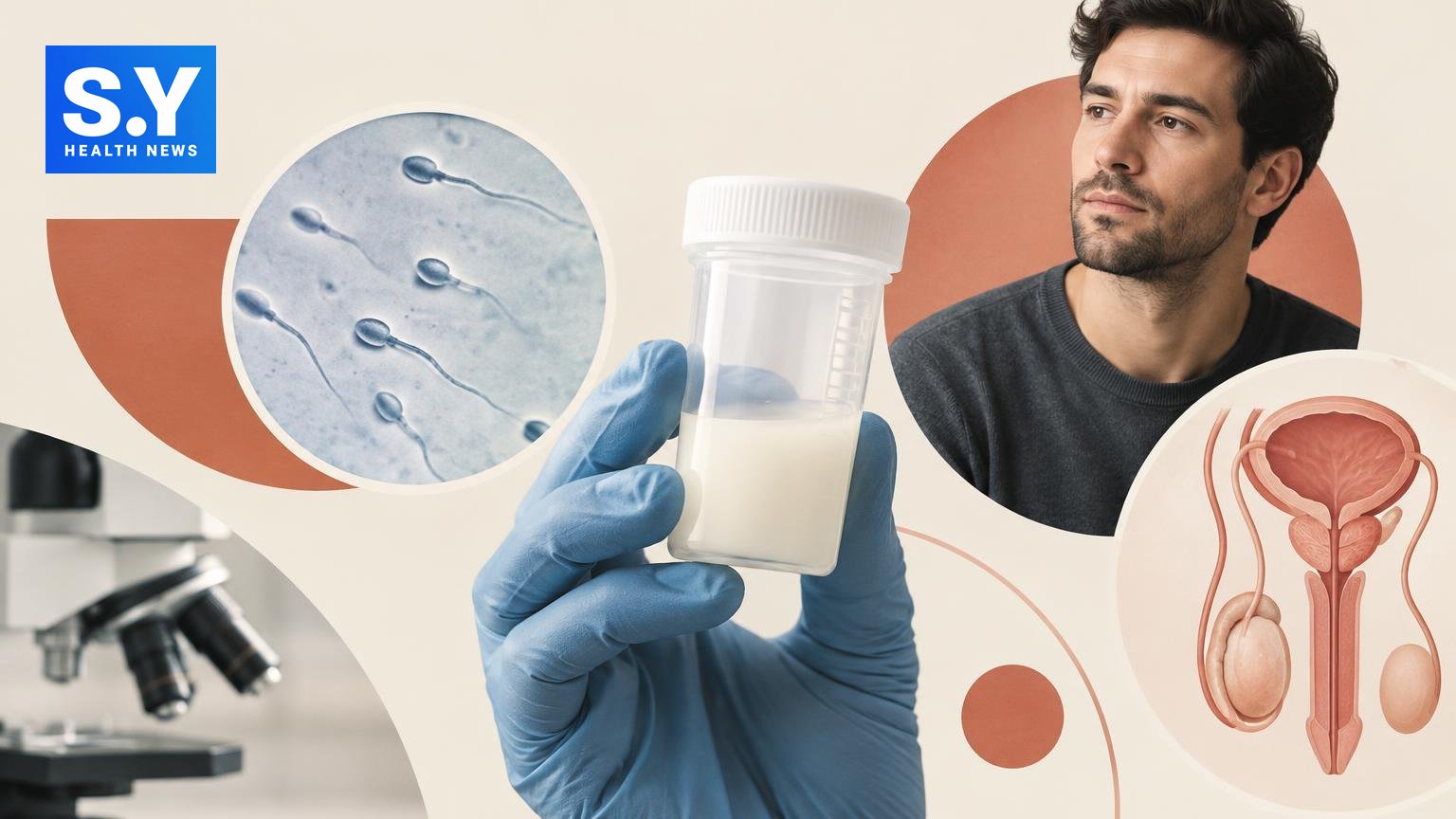
A semen analysis is typically the first test performed to investigate male-factor infertility. It measures the number and quality of sperm in semen, along with other parameters. The test examines sperm count, motility (movement), morphology (shape), semen volume, liquefaction, pH and white blood cells. It is described as the most useful test for male infertility and can also help identify infection in the reproductive system.[1]
Male infertility is a contributing factor in roughly 40 percent of all infertility cases, and sperm health problems account for the majority of male infertility causes. Because sperm levels naturally fluctuate, a single abnormal result does not confirm a diagnosis. Repeat testing is typically recommended, and when abnormalities are confirmed on a second analysis, a fertility specialist develops an individualized plan that may include urology referral, hormone testing, genetic tests and physical examination.
Why Semen Analysis Matters in Male-Factor Infertility
Infertility is often approached as a couple's issue, but male factors contribute substantially. According to the American Society for Reproductive Medicine, as cited by the source page, 20 percent of infertility cases are due solely to male-factor infertility, and another 20 percent are caused by a combination of male infertility and another factor. The same page states that male infertility is a contributing factor in roughly 40 percent of all infertility cases.
Sperm production is a complex, coordinated process. The testicles must function properly and in sequence with the pituitary and hypothalamus glands that trigger sperm production. Sperm then must be transported from the testicles and mixed with semen for ejaculation. Problems at any point in this system can result in poor-quality sperm. A semen analysis provides information about the sperm and semen that affect male fertility, which is why it is typically the first test used to determine whether male-factor infertility is present.
The test can also help identify whether there is an infection in the reproductive system, and results can help determine appropriate infertility treatments. The source page states that a study published by the National Institutes of Health shows that semen analysis can detect 9 out of 10 men with infertility problems, although the page does not provide the study design, sample size, or reference standard used to calculate that proportion.
What the Test Measures
Once a sample reaches the laboratory, it is processed and evaluated for certain parameters. The sperm are assessed for volume, concentration, motility and shape. The broader list of markers includes sperm count, sperm motility, sperm morphology, liquefaction, pH, semen volume and white blood cells.
| Marker | What it reflects | Why it is assessed |
|---|---|---|
| Sperm count / concentration | Number of sperm present in the semen sample | A central indicator of sperm production and a key parameter in male-factor evaluation |
| Sperm motility | Movement of sperm | Movement is necessary for sperm to reach and potentially fertilize an egg |
| Sperm morphology | Shape of sperm | Shape is assessed as part of sperm quality |
| Semen volume | Amount of semen produced | Semen carries, protects and nourishes sperm |
| Liquefaction and pH | Physical and chemical properties of semen | Included among markers measured in the analysis |
| White blood cells | Presence of white blood cells in semen | May help identify infection in the reproductive system |
The source page does not provide reference thresholds or normal ranges for these markers. In practice, laboratory reports typically compare results with reference values, but this explainer can only describe what the test measures, not interpret specific numbers. A discussion with a clinician is needed to understand what any particular value means in context.
Why Results Fluctuate Between Samples
Sperm levels can fluctuate between tests. The same individual giving a sample two weeks apart can expect differences in the semen analysis. Because of this natural variability, repeating a semen analysis is typically recommended in order to obtain an accurate assessment.
The source page does not quantify the magnitude of this variability, nor does it provide confidence intervals or study data on how much a result might change. It also does not specify which parameters fluctuate most. What is clear is that a single sample is not treated as definitive, and repeat testing is part of standard practice.
Collection conditions are one reason results can vary. The page advises that samples are ideally collected at the fertility clinic, but at-home collection is acceptable if the sample is delivered to the clinic within one hour of collection. Collection is typically by masturbation into a sterile container without lubricants, including water-based ones, or by using a special condom during intercourse. A physician may recommend abstaining from ejaculation for a few days before providing a sample. The page does not specify an exact abstinence duration, and it does not provide data on how transport time or abstinence length affects results.
What Happens After an Abnormal Result
If abnormalities are detected on the first analysis, repeating the test is typically recommended before conclusions are drawn. If abnormalities are confirmed on a second analysis, a fertility specialist will develop a treatment plan. These individualized plans are based on the reversibility of the cause, the severity of the problem and other factors.
An appointment with a urologist, a specialist dealing with the male reproductive system and urinary tract, may be required depending on the severity of the cause. Other tests that may be recommended by a fertility specialist or urologist include hormone testing, genetic tests, physical examination and more. The source page lists these as options but does not describe the indications, diagnostic yield or preferred sequence for these further evaluations.
The page does not report outcomes data for men who follow this pathway. It describes a care process rather than the results of a clinical trial. This distinction matters: the pathway reflects general clinical practice as summarized by one fertility program, not a comparative study showing that one follow-up strategy is superior to another.
Interpreting the Evidence and Its Limits
The source for this explainer is a patient education webpage from a fertility program, not a peer-reviewed systematic review or clinical guideline. Several statements on the page are attributed to external bodies or studies without full citation details. For example, the 20 percent and 20 percent breakdown is attributed to the American Society for Reproductive Medicine, but the page does not provide the primary study, sample or denominator behind those figures. The claim that semen analysis can detect 9 out of 10 men with infertility problems is attributed to a National Institutes of Health study, but the page does not describe the study design, reference standard or population.
The 40 percent figure for male contribution to infertility cases is presented as a summary statement without cited primary data. The description of semen analysis as the most useful test for male infertility is a superlative that is not supported on the page by comparative evidence against other tests. The statement that sperm levels fluctuate is clinically familiar, but the page does not quantify the variability or provide confidence intervals.
These limitations do not mean the information is wrong. They mean that the page is a summary for patients, and its claims should be understood as general clinical guidance rather than precise quantitative estimates. A reader should not interpret the 9-out-of-10 detection figure as a universally validated sensitivity, because sensitivity depends on the reference standard and the population tested, neither of which is specified here.
What to Expect and How to Prepare
For a man undergoing a semen analysis, the practical points from the source page are straightforward. Collection at the clinic is preferred, but at-home collection is acceptable if the sample arrives within one hour. Masturbation into a sterile container without lubricants is the standard method, and a special condom can be used during intercourse. A physician may recommend a few days of abstinence from ejaculation before the sample is provided. Because results can vary, more than one sample may be required.
If the first result is abnormal, the next step is usually a repeat analysis rather than immediate treatment. If the abnormality is confirmed, a fertility specialist will discuss an individualized plan. A urology referral, hormone testing, genetic tests and physical examination are among the possible follow-up options. These are clinical decisions that depend on the specific findings, and the source page does not provide a decision algorithm.
Key Takeaways
- A semen analysis is typically the first test for male-factor infertility and measures sperm count, motility, morphology, semen volume, liquefaction, pH and white blood cells.
- Male infertility contributes to roughly 40 percent of infertility cases, and sperm health problems account for the majority of male infertility causes, according to the source page.
- Sperm levels fluctuate, so a single abnormal result is typically followed by a repeat analysis before a treatment plan is made.
- Confirmed abnormalities may lead to urology referral, hormone testing, genetic tests and physical examination, but the source page does not describe the outcomes of these follow-up pathways.
Questions and Answers
What does a semen analysis test measure?
A semen analysis measures sperm count, motility (movement) and morphology (shape), along with semen volume, liquefaction, pH and white blood cells. It is typically the first test used to investigate male-factor infertility and can also help identify infection in the reproductive system. The source page does not provide reference thresholds for these markers.
Why can semen analysis results differ between two samples from the same man?
Sperm levels naturally fluctuate between tests. The same individual giving a sample two weeks apart can expect differences in the semen analysis. Because of this variability, repeating the test is typically recommended to obtain a more accurate assessment. The source page does not quantify how much results are likely to change or which parameters vary most.
What happens if a first semen analysis is abnormal?
If abnormalities are detected on the first analysis, a repeat test is typically recommended. If the abnormality is confirmed on a second analysis, a fertility specialist develops an individualized treatment plan based on the reversibility of the cause and the severity of the problem. A urology referral, hormone testing, genetic tests and physical examination may be considered.
How much of infertility is due to male factors?
According to the American Society for Reproductive Medicine, as cited by the source page, 20 percent of infertility cases are due solely to male-factor infertility and another 20 percent involve a combination of male and other factors. The page also states that male infertility contributes to roughly 40 percent of all infertility cases. These figures are summary statements without primary study details on the page.
How should a man prepare for a semen analysis?
Collection at the fertility clinic is preferred, but at-home collection is acceptable if the sample is delivered within one hour. Masturbation into a sterile container without lubricants is standard, or a special condom can be used during intercourse. A physician may recommend abstaining from ejaculation for a few days before the sample. The source page does not specify an exact abstinence duration.
How reliable is a semen analysis for detecting male infertility?
The source page states that a study published by the National Institutes of Health shows semen analysis can detect 9 out of 10 men with infertility problems. However, the page does not report the study design, sample size or reference standard, so that detection proportion should not be treated as a universal sensitivity estimate. Semen analysis is described as the most useful test for male infertility, but the page does not cite comparative data.
Sources and References
SANYUN Science Center explains published research on men's reproductive and sexual health, connecting scientific evidence with everyday questions while making sources and limitations clear.
Disclaimer: This article is for scientific education and research communication only. It does not provide medical advice, diagnosis, or individualized treatment recommendations, and does not endorse any medication, supplement, device, penile enlargement procedure, or other intervention. Decisions about sexual and reproductive health should be made in consultation with a qualified healthcare professional. Do not delay seeking professional care because of information in this article.
Original Content & Copyright Notice
- This article is prepared for SANYUN Science Center, drawing on published research and publicly available academic literature on men’s sexual and reproductive health. Its editorial explanations and presentation are developed for this platform.
- Copyright in the original editorial content, selection, and arrangement is reserved by SANYUN Science Center to the extent protected by applicable law. Referenced research, quotations, and third-party materials remain subject to the rights of their respective owners. This notice does not claim ownership of scientific facts or third-party research.
- Except where permitted by applicable law or an applicable license, prior written permission is required to reproduce, republish, translate, adapt, redistribute, or commercially reuse protected content. Attribution alone does not grant permission for such reuse.
- For permitted quotation or authorized reuse, clearly identify the source and retain a link to the original article.
- Source: SANYUN Science Center
- Original URL: Retain the original article URL on science.san-yun.com.
- Copyright Holder: SANYUN Science Center, for its own protected editorial content.
- Quotation, excerpts, or authorized reuse must not distort the scientific meaning, omit material limitations or disclaimers, or imply unverified medical claims, product efficacy, or endorsement by SANYUN Science Center.



