




Category: Latest Research
Core Research Direction: Pooled prevalence of erectile dysfunction, premature ejaculation, and broader sexual dysfunction in men with chronic prostatitis/chronic pelvic pain syndrome, with attention to heterogeneity and comparison-group context
Search Intent: How common are erectile dysfunction, premature ejaculation, and other sexual problems in men with chronic prostatitis/chronic pelvic pain syndrome, and how uncertain are those estimates?
Platform: SANYUN Science Center
Evidence reviewed through: 2026-11-08
Executive Summary
A systematic review and meta-analysis published in 2025 pooled observational studies to estimate how often sexual dysfunction occurs in men with chronic prostatitis/chronic pelvic pain syndrome (CP/CPPS). The review followed MOOSE guidance and searched four databases for studies published from January 2000 to 2025.[1]
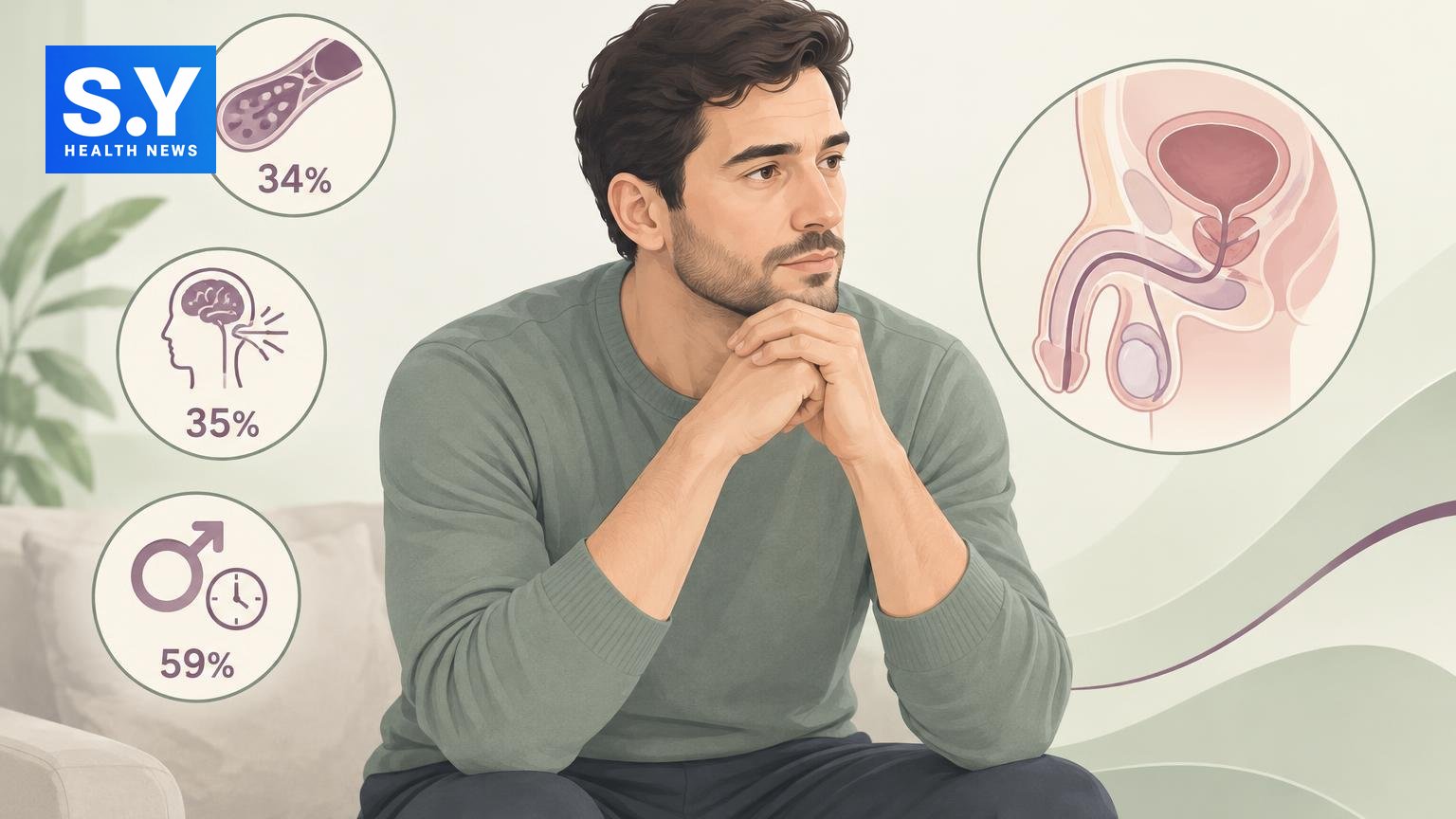
Across 26 studies and 20,127 participants, the pooled prevalence of erectile dysfunction was 34%, and the pooled prevalence of premature ejaculation was 35%. The pooled prevalence of overall sexual dysfunction was 59% across six studies and 5333 participants.
These headline numbers come with unusually wide uncertainty. Heterogeneity exceeded 98% in every pooled analysis, and the confidence intervals for overall sexual dysfunction and premature ejaculation span several tens of percentage points. The estimates describe a population burden; they do not predict any individual man's likelihood of a sexual problem.
Why These Estimates Matter
CP/CPPS is described in the review as a common condition associated with substantial urogenital symptoms, including sexual dysfunction. Because the condition is chronic and often difficult to treat, knowing how frequently sexual problems accompany it helps clinicians decide what to ask about and helps patients recognize that such symptoms are not unusual.
Sexual dysfunction in this context is not a single outcome. The review set out to consider four primary categories: desire, arousal, orgasm and pain disorders. Erectile dysfunction reflects the arousal domain, whereas premature ejaculation and painful ejaculation sit within ejaculatory and orgasm-related domains. Lumping these together into one "overall" figure inevitably blurs distinctions that matter clinically.
Biological and Clinical Context
The sources reviewed here do not establish a mechanism. What they show is a consistent association: men with CP/CPPS report more sexual dysfunction than comparison groups in several domains. In one Iraqi case-control study of 112 patients and 64 healthy volunteers, erectile dysfunction was reported in 46% of patients versus 39% of controls, and premature ejaculation in 49% versus 25%.[2]
The same study found much larger differences for ejaculation-related outcomes: painful ejaculation in 65% of patients versus 11% of controls, and ejaculatory dissatisfaction in 67% versus 17%. Mean symptom scores on the NIH Chronic Prostatitis Symptom Index were higher in patients, with pain or discomfort the predominant symptom.
Plausible explanations include pain and pelvic floor dysfunction interfering with arousal and ejaculation, psychological distress accompanying a chronic pain condition, and overlapping lower urinary tract symptoms. These are hypotheses rather than findings tested in the included studies. The review authors themselves note that contributing factors remain to be identified.
What the Evidence Shows
| Outcome | Pooled prevalence (95% CI) | Studies / participants | Heterogeneity (I²) |
|---|---|---|---|
| Overall sexual dysfunction | 59% (34–81%) | 6 studies / 5333 | 98% |
| Erectile dysfunction | 34% (26–42%) | 24 studies / 20,127 | 99% |
| Premature ejaculation | 35% (22–49%) | 10 studies / 13,686 | 98% |
The erectile dysfunction estimate is the most stable of the three in absolute terms, with a confidence interval roughly 16 percentage points wide, but its heterogeneity is still 99%. The overall sexual dysfunction and premature ejaculation estimates each carry intervals spanning close to 30 percentage points. In practical terms, the data support the statement that these problems are common in CP/CPPS, not that any precise proportion applies to a given clinic or country.
Publication bias assessment gave mixed signals. Funnel plot inspection suggested possible asymmetry, but Egger's test was non-significant (p = 0.7034). A non-significant Egger's test does not rule out small-study effects, particularly with the very high between-study heterogeneity reported here.
Interpretation and Limitations
The central limitation is heterogeneity. When I² exceeds 98%, a pooled estimate functions as a weighted average across studies that may differ in case definitions, symptom severity, recruitment setting, age distribution, questionnaire thresholds and cultural reporting of sexual concerns. The pooled figure is a summary of that diversity rather than a description of a uniform population.
The number of studies contributing to each estimate also varies substantially: 24 studies informed erectile dysfunction, 10 informed premature ejaculation, but only six informed overall sexual dysfunction. The overall figure therefore rests on a narrower evidence base than its prominence might suggest.
The comparison-group evidence is thin. The Iraqi case-control study is a single-center design with 112 patients and 64 controls and does not report adjustment for confounders in its abstract. Its erectile dysfunction difference (46% versus 39%) is modest relative to premature ejaculation and ejaculatory pain differences. None of this establishes that CP/CPPS causes sexual dysfunction; it establishes association.
A further caution concerns measurement. The Iraqi study used the IIEF-5 for erectile dysfunction, the Premature Ejaculation Diagnostic Tool, and selected Ejaculatory Function Questionnaire items for pain and dissatisfaction. The meta-analysis pooled observational studies without, from the abstract, imposing a single instrument. Different questionnaires and cut-offs can shift prevalence meaningfully.
Research Outlook
The review authors conclude that the substantial heterogeneity underscores the need for further research to identify contributing factors and develop targeted interventions. That is a measured call, not a report of a tested treatment. No intervention trial results appear in the material reviewed here.
Useful next steps would include studies that standardize outcome measures, report symptom severity and duration, separate inflammatory and non-inflammatory subtypes, and adjust for age and comorbid conditions. Until such work exists, clinicians should treat these pooled figures as a reminder to ask about sexual function rather than as diagnostic thresholds.
Key Takeaways
- In pooled observational data, 34% of men with CP/CPPS had erectile dysfunction, 35% had premature ejaculation, and 59% had overall sexual dysfunction; all estimates showed heterogeneity above 98%.
- Confidence intervals are wide, especially for overall sexual dysfunction (34–81%) and premature ejaculation (22–49%), so the figures describe population burden rather than individual risk.
- A single-center Iraqi case-control study found larger patient-control gaps for painful ejaculation (65% versus 11%) and ejaculatory dissatisfaction (67% versus 17%) than for erectile dysfunction (46% versus 39%).
- The evidence is associative and observational; mechanisms and effective targeted interventions remain areas for further research.
Questions and Answers
What is chronic prostatitis/chronic pelvic pain syndrome (CP/CPPS)?
CP/CPPS is a chronic condition in men involving pelvic pain and urogenital symptoms without a clearly identified bacterial cause in the syndrome category discussed here. The reviewed sources describe it as a common, bothersome condition associated with substantial urogenital symptoms, including sexual dysfunction, and note that pain or discomfort is often the predominant symptom.
How common is erectile dysfunction in men with chronic prostatitis/chronic pelvic pain syndrome?
A 2025 meta-analysis pooled 24 studies with 20,127 participants and estimated erectile dysfunction prevalence at 34% (95% CI 26–42%). Heterogeneity was 99%, so this is a broad burden estimate rather than a precise figure for any particular clinic or country. A single-center Iraqi study reported 46% in patients versus 39% in controls.
Is premature ejaculation more common in men with CP/CPPS than in men without it?
Pooled observational data estimate premature ejaculation prevalence at 35% (95% CI 22–49%) among men with CP/CPPS across 10 studies and 13,686 participants. The Iraqi case-control study found 49% in patients versus 25% in healthy volunteers. The direction is consistent, but heterogeneity is very high and the comparison comes from a single center.
How strong is the evidence linking chronic prostatitis to sexual dysfunction?
The evidence is observational and associative. The meta-analysis pooled 26 studies with 20,127 participants, but heterogeneity exceeded 98% in every analysis, confidence intervals were wide, and publication-bias assessment gave mixed signals: funnel plot asymmetry with a non-significant Egger's test (p = 0.7034). Causation is not established.
What are the limitations of pooled prevalence estimates for sexual dysfunction in CP/CPPS?
Key limitations include very high between-study heterogeneity, differing questionnaires and thresholds, variable case definitions and settings, and an overall sexual dysfunction estimate resting on only six studies. Comparison-group data are sparse and largely single-center. The pooled numbers summarize a diverse literature rather than describing a uniform patient population.
What should men with pelvic pain and sexual symptoms discuss with a clinician?
Men experiencing pelvic pain alongside erectile difficulties, rapid ejaculation, painful ejaculation or reduced sexual satisfaction can raise these symptoms directly, since the reviewed evidence suggests they commonly co-occur. Discussion can cover symptom pattern, duration and impact on quality of life. This article summarizes published prevalence data and does not provide diagnosis or treatment advice.
Sources and References
- Saad Alshahrani; Basem A. Fathi; Tamer A. Abouelgreed; Ashraf El-Metwally. Prevalence of Sexual Dysfunction with Chronic Prostatitis/Chronic Pelvic Pain Syndrome (CP/CPPS): An Updated Systematic Review and Meta-Analysis. Medicina (Lithuania). 2025 61(6) DOI: 10.3390/medicina61061110.
- Ali Hadi Sabhan; Abbas Sabbar Dakhil. The Influence of Chronic Prostatitis and Chronic Pelvic Pain Syndrome on Sexual Function in Iraqi Men. Al-Rafidain Journal of Medical Sciences. 2023 5:237–241 DOI: 10.54133/ajms.v5i.243.
SANYUN Science Center explains published research on men's reproductive and sexual health, connecting scientific evidence with everyday questions while making sources and limitations clear.
Disclaimer: This article is for scientific education and research communication only. It does not provide medical advice, diagnosis, or individualized treatment recommendations, and does not endorse any medication, supplement, device, penile enlargement procedure, or other intervention. Decisions about sexual and reproductive health should be made in consultation with a qualified healthcare professional. Do not delay seeking professional care because of information in this article.
Original Content & Copyright Notice
- This article is prepared for SANYUN Science Center, drawing on published research and publicly available academic literature on men’s sexual and reproductive health. Its editorial explanations and presentation are developed for this platform.
- Copyright in the original editorial content, selection, and arrangement is reserved by SANYUN Science Center to the extent protected by applicable law. Referenced research, quotations, and third-party materials remain subject to the rights of their respective owners. This notice does not claim ownership of scientific facts or third-party research.
- Except where permitted by applicable law or an applicable license, prior written permission is required to reproduce, republish, translate, adapt, redistribute, or commercially reuse protected content. Attribution alone does not grant permission for such reuse.
- For permitted quotation or authorized reuse, clearly identify the source and retain a link to the original article.
- Source: SANYUN Science Center
- Original URL: Retain the original article URL on science.san-yun.com.
- Copyright Holder: SANYUN Science Center, for its own protected editorial content.
- Quotation, excerpts, or authorized reuse must not distort the scientific meaning, omit material limitations or disclaimers, or imply unverified medical claims, product efficacy, or endorsement by SANYUN Science Center.



