




Category: Reproductive Care
Core Research Direction: Vasectomy as permanent male contraception: mechanism, procedure, post-vasectomy semen confirmation, failure and complication rates, and reversibility, explained for patient education
Search Intent: How does a vasectomy prevent pregnancy, how do patients know it has worked, and what can it not guarantee?
Platform: SANYUN Science Center
Evidence reviewed through: 2026-11-12
Executive Summary
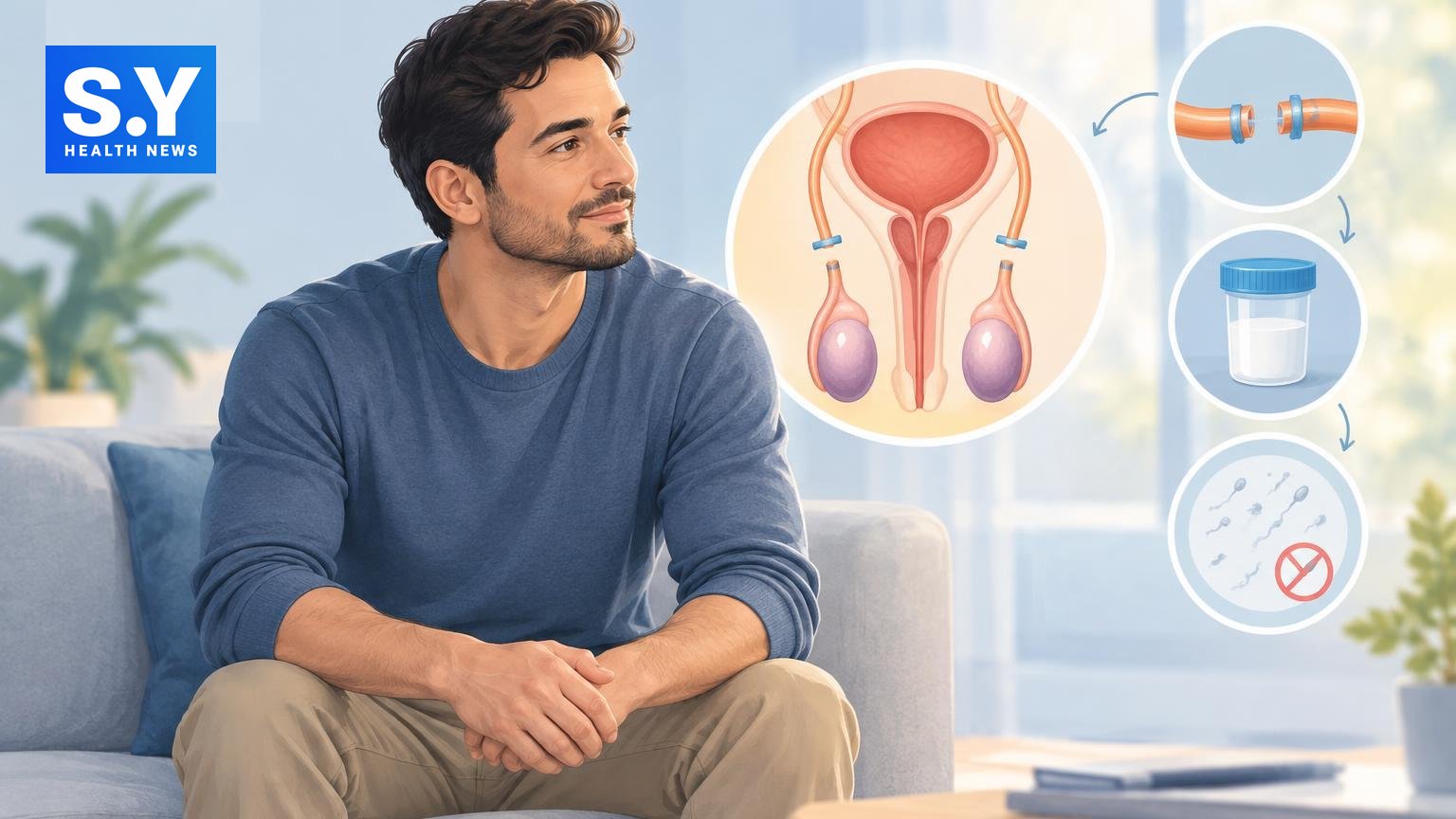
A vasectomy, also called male sterilisation, is a permanent method of contraception. It works by interrupting the vas deferens, the tube that carries sperm from each testicle, so that sperm are no longer ejaculated during sex. Consumer guidance describes it as a day-case-style procedure usually performed under local anaesthetic and taking around 30 minutes, with pain for one to two weeks afterwards being common.[1][2]
The critical patient-education point is that a vasectomy is not immediately effective. Sperm already stored beyond the blocked segment must clear, so another contraceptive method is needed until a post-vasectomy semen analysis confirms the result. Contemporary guideline reporting allows testing as early as eight weeks, with many clinicians targeting roughly eight to ten weeks, and permits contraception to stop after complete azoospermia or a low threshold of rare non-motile sperm in a properly handled sample.[3]
Effectiveness is high but never absolute. After a confirming semen test showing no sperm, pregnancy risk has been estimated in many studies at about one in 2,000; before any confirming test, the chance of pregnancy with unprotected intercourse is described as close to 100%. Bleeding and infection are recognised surgical risks, chronic scrotal pain is reported in roughly 1% to 2% of men, and reversal is complex surgery that does not always restore fertility.
Why Permanent Male Contraception Deserves Careful Counseling
Vasectomy is common and its use has grown. In the United States, about 6.8% of men aged 18 to 49 have had a vasectomy, rising to over 14% among men aged 45 to 49. Reported prevalence also differs by race and ethnicity, with 10.1% among white men compared with 3.3% among Hispanic men and 2.8% among Black men in figures attributed to the Centers for Disease Control and Prevention. These patterns describe who uses the procedure, not who is medically suited to it, and the supplied reporting does not give survey denominators or methods.
Demand appears responsive to context as well as clinical need. Urologists quoted in professional media describe seasonal spikes and increased searches or consultations around major policy events, but these observations are not measured outcomes in the supplied material. What matters for patient education is that a permanent decision made under time pressure, relationship change, or financial incentive still deserves the same structured discussion of alternatives, irreversibility, and the need for follow-up testing.
How a Vasectomy Prevents Pregnancy
Sperm are produced in the testicles and travel through a tube called the vas deferens, of which men typically have one on each side. A vasectomy surgically interrupts these tubes; the vas deferens are cut and tied or sealed with heat, and the skin may or may not be closed with sutures. The testicles continue to produce sperm and testosterone, but sperm can no longer join the ejaculate that leaves the penis.
This anatomy explains both the delayed effectiveness and the sexual-function questions patients commonly raise. Sperm already beyond the blockage at the time of the procedure must be washed out over weeks to months, and the procedure does not stop semen production. Expert commentary attributes to the Urological Care Foundation the statement that semen volume does not decrease by more than 5%, and describes vasectomy as not changing sexual function, erections, ejaculation or orgasm. It offers no protection against sexually transmitted infections, including HIV, so condom use remains relevant for infection prevention.
A vasectomy is not the same as castration and does not remove the testicles. Hormone production and the sensation of orgasm are described as unchanged; what changes is the presence of sperm in the ejaculate. This distinction is central to correcting the misconception that the operation affects masculinity, libido, or the physical experience of sex.
The Procedure and Contemporary Technique Recommendations
Most vasectomies are performed in a clinic under local anaesthesia, although anatomy or patient preference may lead to sedation or general anaesthesia in some cases. The 2026 American Urological Association guideline, as summarised in professional media, recommends local anaesthesia by skin infiltration with a needle or jet injector and a minimally invasive approach such as no-scalpel vasectomy for isolating the vas. Routine antibiotic prophylaxis is not recommended for uncomplicated vasectomy, although it may be considered for selected higher-risk patients.
Technique matters for failure risk. The guideline strongly recommends combining mucosal cautery with fascial interposition, and discourages ligation and excision of a short vas segment alone because of higher failure rates. Routine histological examination of removed vas tissue is not required because it does not affect clinical outcomes. These are procedural standards rather than patient-facing guarantees, and the supplied summary does not provide comparative failure percentages for each technique.
| Topic | What the guidance says | What it means for patients |
|---|---|---|
| Anaesthesia | Local anaesthesia by skin infiltration with a needle or jet injector is recommended; sedation or general anaesthesia may be used in some cases. | Most men are awake for a clinic-based procedure; the choice can be individualised. |
| Surgical approach | A minimally invasive approach such as no-scalpel vasectomy is recommended for vas isolation. | Smaller-access techniques are preferred, but the supplied sources do not quantify recovery differences. |
| Occlusion method | Mucosal cautery combined with fascial interposition is strongly recommended; ligation and excision alone is discouraged. | The technique chosen by the surgeon is a legitimate question to ask before the procedure. |
| Antibiotics | Routine prophylaxis is not recommended for uncomplicated vasectomy; consider in selected high-risk patients. | Most men should not expect routine antibiotics. |
| Tissue pathology | Routine histological evaluation of excised vas segments is not required. | Sending tissue to pathology is not a standard quality marker. |
Recovery advice is practical rather than pharmacological. Most doctors recommend waiting one to two weeks after vasectomy before sex or ejaculation, and patients are commonly advised to avoid heavy lifting and strenuous activity for a period, with walking permitted. Pain is usually managed with simple analgesia and icing, and snug supportive underwear can reduce discomfort. The supplied sources do not provide a single evidence-based return-to-work timeline; physically demanding jobs may require more time off.
What the Evidence Shows: Confirming Success
Post-vasectomy semen analysis is the dividing line between hope and documented contraception. Expert commentary describes checking a sample about three months after the procedure to confirm that old sperm has cleared, while noting that some men take up to about six months. The 2026 guideline summary is more permissive about timing, allowing testing as early as eight weeks, with many clinicians targeting roughly eight to ten weeks to balance accuracy and convenience. Patients should follow their own service's protocol rather than assume one date applies everywhere.
The contemporary stopping rule is specific. Contraception may be discontinued after complete azoospermia or up to 100,000 rare non-motile sperm per millilitre in an uncentrifuged sample evaluated within two hours of collection. If the sample is evaluated more than two hours after collection, complete azoospermia is required before stopping contraception. If these criteria are met, guideline reporting indicates that one semen analysis is sufficient and repeat analyses are not needed.
Persistent sperm changes the plan. Motile sperm that persist require repeat testing, and motile sperm at six months should prompt counseling about repeat vasectomy; persistent non-motile sperm above 100,000 per millilitre calls for shared decision-making among repeat vasectomy, continued contraception, and further semen evaluations. Mail-in testing is described as acceptable and potentially adherence-improving, but because of assay limitations it requires azoospermia to confirm success, and any detected sperm is treated as a failed result.
Effectiveness, Failure, and Complications
Vasectomy is highly effective but not perfectly so. After a semen test shows no sperm, pregnancy risk has been estimated in many studies at about one in 2,000, which is far lower than typical condom failure but is not zero. Failure can occur through reconnection of the divided tube or through microscopic channels that allow sperm to pass. The risk varies substantially depending on whether a confirming semen test was done; without one, unprotected intercourse early after the procedure carries a chance of pregnancy described as close to 100%.
Complications are generally not life-threatening but are real. Bleeding and infection are the most obvious surgical risks; bleeding usually occurs internally into the scrotal sac, causing bruising, swelling and discomfort that may take weeks to resolve, and the risk is described as increasing with blood pressure. Chronic scrotal pain is less obvious and can last months, years, or longer; AUA figures cited in expert commentary place it at about 1% to 2% of men. Treatment may include anti-inflammatory medication, but some cases require surgery larger than the original vasectomy.
Immunological changes are common but usually silent. Most, though not all, men who undergo vasectomy develop anti-sperm antibodies because sperm become exposed to the immune system; this is described as not posing a general health concern and not something patients feel. The issue arises later: antibodies may persist after reversal and can coat sperm, slow them and impair function, which complicates fertility restoration even when the tube is successfully reconnected.
No causal association has been established between vasectomy and prostate cancer, high-grade prostate cancer, prostate cancer mortality, cardiovascular disease, or kidney stones. This does not mean every study is identical or that individual risk factors disappear; it means that observed health problems after vasectomy should be attributed to baseline risk factors rather than to the procedure itself, a point the guideline summary explicitly supports for counseling.
Reversal Is Not a Backup Contraceptive Plan
Vasectomy is intended to be permanent. Reversal is possible but does not always work even in expert hands, is operating-room microsurgery, is often expensive if not covered, and is not usually available in publicly funded systems such as the NHS. Surgeons offering reversal should be able to perform both vasovasostomy and vasoepididymostomy. The best preoperative predictors of reversal success are the duration of the obstructive interval, patient age, and female partner age.
Restoration of sperm and restoration of pregnancy are not the same outcome. Expert commentary notes that reversal within about 10 years offers a good chance of returning sperm to the ejaculate, but sperm in the ejaculate does not necessarily translate into pregnancy, and the female partner's fertility also matters. Sperm retrieval with intracytoplasmic sperm injection is an additional option but adds cost, time, and complexity. For these reasons, patients with any uncertainty about future children are generally advised to defer vasectomy.
Interpretation and Limitations
The evidence base here mixes consumer guidance, expert interview commentary, and a clinical practice guideline summarised through a professional news FAQ. None of the supplied sources is a primary study, and several figures are secondhand. The one-in-2,000 pregnancy estimate, the 1% to 2% chronic pain range, and the 5% semen-volume ceiling are useful for counseling but should not be treated as precise individual probabilities. The guideline summary does not provide comparative failure rates by technique, and the older consumer page predates the 2026 guidance.
A further limitation is discordance in follow-up timing. Earlier expert commentary describes semen analysis at about three months, while the 2026 guideline summary supports testing from eight weeks and notes that many clinicians target eight to ten weeks. This is not necessarily a contradiction: protocols vary, and testing too early can produce a false reassuring result if clearance is incomplete. Patients should use the schedule and thresholds specified by their own provider rather than mixing guidance.
Readers should also distinguish association from causation in the long-term health data. Absence of a demonstrated causal link is reassuring, but it is a statement about current evidence, not a guarantee for every individual. Likewise, prevalence differences by race, education, and marital status almost certainly reflect access, cost, cultural norms, and reproductive decision-making rather than differences in the procedure's biological effect.
Research and Practice Outlook
The most active area of change is follow-up. Guideline reporting emphasises earlier and simpler post-vasectomy semen analysis, including mail-in testing, and a single adequate sample may replace repeated testing when criteria are met. If these approaches improve adherence without increasing unrecognised failure, they could reduce the gap between having a vasectomy and reliably depending on it. The supplied material does not include head-to-head outcome data comparing mail-in and clinic-based testing.
Technique standardisation is the second theme. Strong endorsement of mucosal cautery with fascial interposition, discouragement of ligation and excision alone, and no routine antibiotics or histology all aim to reduce failure and unnecessary intervention. Patient counseling is the third theme: framing vasectomy as permanent, correcting misinformation about systemic disease, and discussing reversal honestly are presented as core clinical tasks rather than optional extras.
Key Takeaways
- A vasectomy interrupts the vas deferens so sperm are no longer ejaculated; it is intended to be permanent and does not protect against sexually transmitted infections.
- It is not effective immediately: use another contraceptive method until a post-vasectomy semen analysis confirms the result.
- Contemporary guideline reporting permits semen testing from eight weeks and allows contraception to stop after complete azoospermia or up to 100,000 rare non-motile sperm per millilitre in an uncentrifuged sample evaluated within two hours.
- After confirmed azoospermia, pregnancy risk has been estimated at about one in 2,000 in many studies; it is very low but never zero.
- Bleeding, infection, and chronic scrotal pain in roughly 1% to 2% of men are recognised risks; most men recover within one to two weeks but should avoid strenuous activity initially.
- Reversal is complex, costly, and not guaranteed; it should not be planned as a routine backup to vasectomy.
Questions and Answers
How does a vasectomy prevent pregnancy?
A vasectomy interrupts the vas deferens, the tube that carries sperm from each testicle, so sperm are no longer ejaculated during sex. The testicles still produce sperm and hormones, and semen volume is largely unchanged, but the ejaculate no longer contains sperm. Because sperm already beyond the blockage must clear, the procedure is not immediately effective and requires semen testing to confirm.
How is success confirmed after a vasectomy?
Success is confirmed by post-vasectomy semen analysis, not by the passage of time alone. Contemporary guideline reporting allows testing from eight weeks, with many clinicians targeting eight to ten weeks. Contraception may stop after complete azoospermia or up to 100,000 rare non-motile sperm per millilitre in an uncentrifuged sample evaluated within two hours; later-evaluated samples require complete azoospermia.
What is the pregnancy risk after a vasectomy?
After a semen test confirms no sperm, pregnancy risk has been estimated in many studies at about one in 2,000, which is very low but not zero. Before any confirming test, unprotected intercourse carries a chance of pregnancy described as close to 100% because stored sperm may still be present. This is why another contraceptive method is needed until confirmation.
What are the main risks and side effects of a vasectomy?
Bleeding and infection are the most obvious surgical risks; bleeding is usually internal into the scrotum and may cause bruising and swelling. Chronic scrotal pain is reported in roughly 1% to 2% of men and can last months or longer. Most men have pain for one to two weeks after the procedure and are advised to avoid strenuous activity initially.
Can a vasectomy be reversed if I want children later?
Reversal is possible but not guaranteed, even in expert hands. It is operating-room microsurgery, often expensive, and not usually available in publicly funded systems such as the NHS. Reversal within about 10 years offers a good chance of returning sperm to the ejaculate, but sperm return does not necessarily lead to pregnancy, and anti-sperm antibodies may persist. Vasectomy should therefore be treated as permanent.
Does a vasectomy increase the risk of prostate cancer or heart disease?
No causal association has been established between vasectomy and prostate cancer, high-grade prostate cancer, prostate cancer mortality, cardiovascular disease, or kidney stones. Observed health problems after vasectomy are attributed to baseline risk factors rather than the procedure itself. This is a statement about current evidence and is used to reassure patients during counseling, not a guarantee for every individual.
Sources and References
- What is a vasectomy?.
- Sara Berg. What doctors want patients to know about getting a vasectomy. American Medical Association (AMA)
- Schlegel PN; Clark JY; Coward , RM. 2026 AUA Vasectomy Guideline: Key updates and clinical FAQs | Urology Times. J Urol DOI: 10.1097/JU.0000000000004861.
SANYUN Science Center explains published research on men's reproductive and sexual health, connecting scientific evidence with everyday questions while making sources and limitations clear.
Disclaimer: This article is for scientific education and research communication only. It does not provide medical advice, diagnosis, or individualized treatment recommendations, and does not endorse any medication, supplement, device, penile enlargement procedure, or other intervention. Decisions about sexual and reproductive health should be made in consultation with a qualified healthcare professional. Do not delay seeking professional care because of information in this article.
Original Content & Copyright Notice
- This article is prepared for SANYUN Science Center, drawing on published research and publicly available academic literature on men’s sexual and reproductive health. Its editorial explanations and presentation are developed for this platform.
- Copyright in the original editorial content, selection, and arrangement is reserved by SANYUN Science Center to the extent protected by applicable law. Referenced research, quotations, and third-party materials remain subject to the rights of their respective owners. This notice does not claim ownership of scientific facts or third-party research.
- Except where permitted by applicable law or an applicable license, prior written permission is required to reproduce, republish, translate, adapt, redistribute, or commercially reuse protected content. Attribution alone does not grant permission for such reuse.
- For permitted quotation or authorized reuse, clearly identify the source and retain a link to the original article.
- Source: SANYUN Science Center
- Original URL: Retain the original article URL on science.san-yun.com.
- Copyright Holder: SANYUN Science Center, for its own protected editorial content.
- Quotation, excerpts, or authorized reuse must not distort the scientific meaning, omit material limitations or disclaimers, or imply unverified medical claims, product efficacy, or endorsement by SANYUN Science Center.



