


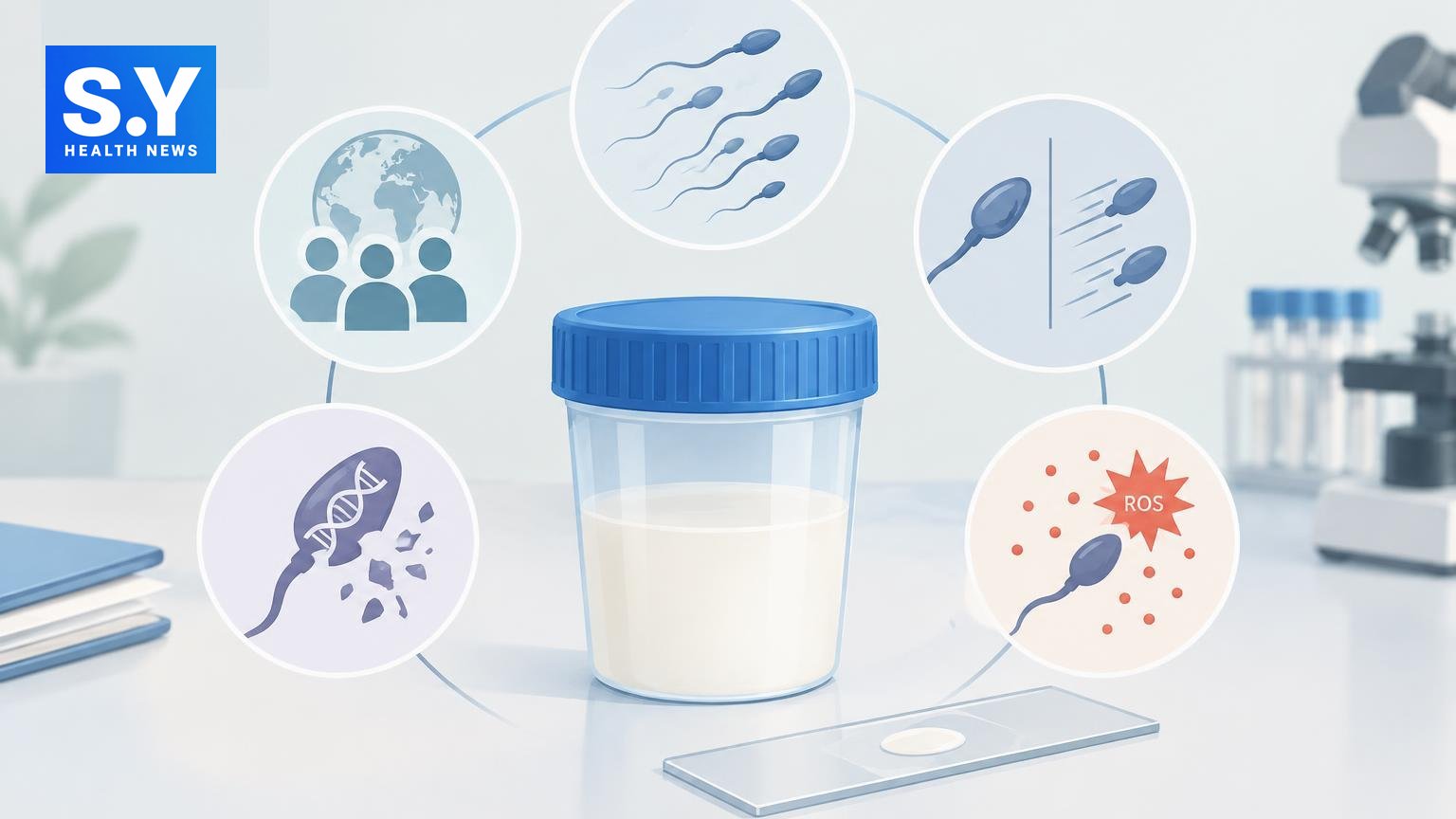


Category: Reproductive Care
Core Research Direction: Clinician-facing explanation of what changed in the WHO 6th edition semen analysis manual (reference values, motility grading, new SDF/oxidative-stress tests) and what those changes mean for interpreting semen analysis in male fertility assessment
Search Intent: How does the WHO 6th edition semen analysis manual change how semen analysis results should be interpreted, and what do its new and revised tests actually establish?
Platform: SANYUN Science Center
Evidence reviewed through: 2026-10-31
Executive Summary
Semen analysis remains the gold-standard first test in a couple's fertility evaluation, yet it is not standardized enough to predict time to conception or to select the best assisted reproduction approach. The 6th edition of the WHO laboratory manual, published in 2021, is the current version. It revised basic semen reference values using data from fertile men in the 5th edition plus five additional studies published between 2010 and 2020, and it deliberately moved away from treating a single 5th-centile threshold as a diagnostic boundary. It also introduced extended tests for sperm DNA fragmentation and seminal oxidative stress, dropped several conventional diagnostic labels, and re-adopted a two-grade division of progressive motility. These are mostly methodological and interpretive changes; they do not by themselves establish that any new test improves pregnancy outcomes.[1]
The practical message for clinicians is that a semen report is now more useful as a structured description of ejaculate quality than as a yes-or-no fertility verdict. Reference limits derive from a mixed population and should not be read as definitive fertility versus infertility cutoffs. The new advanced tests are introduced with technical detail but without clear clinical indications or standardized cutoffs, so their role in routine decision-making remains undefined.
Why the 6th Edition Matters for Interpretation
The WHO manual has gone through six editions aimed at standardizing how infertile men are evaluated. Earlier editions encouraged clinicians to compare a patient's results against a reference distribution, most often the 5th centile, and to label the sample accordingly. The 6th edition explicitly states that 5th-centile values are only one way to interpret a semen analysis and that using them alone is insufficient to diagnose male infertility. This is a meaningful shift in framing: the report becomes one input into a broader clinical assessment rather than a stand-alone diagnosis.
One reason for the shift is that the reference values themselves come from geographically and clinically mixed groups of men. The revision attempted to address a known limitation of the 5th edition, where reference values were skewed toward particular geolocations, by pooling data from fertile men in the 5th edition with five additional studies published between 2010 and 2020. Even so, the resulting limits are not definitive boundaries between fertility and infertility. Clinicians who continue to quote older 5th-centile values should therefore explain what those numbers represent rather than present them as diagnostic thresholds.
What Changed in Basic Semen Parameters
Most of the basic-parameter changes are technical refinements rather than new biology. For sperm counting, semen dilutions were simplified, but the manual now calls for counting 200 spermatozoa per replicate. Evaluation of low sperm concentrations below 2 × 10^6/mL requires greater precision because counting errors are proportionally larger when few sperm are present. The manual also recommends assessing sperm vitality when total motility is below 40%, since distinguishing live-but-immotile sperm from dead sperm changes the interpretation of a severely asthenospermic sample.
The 6th edition also adds evaluation of semen odor, noting that urine or putrefactive odors may be clinically interesting while acknowledging that the parameter is difficult to standardize. At the same time, it removes obsolete tests such as human cervical mucus evaluation and older sperm–egg interaction assays including human oocyte and zona pellucida binding and hamster oocyte penetration tests. These removals matter for laboratories because they reduce the menu of legacy tests that no longer have a defensible routine role.
Perhaps the most visible terminology change is the abandonment of labels such as normozoospermia, asthenozoospermia, necrozoospermia and teratozoospermia. The stated rationale is that reference thresholds alone are meaningless and that multiple criteria must be applied before diagnosing male infertility. Clinicians trained under earlier editions may find the absence of these labels inconvenient, but the change is consistent with the broader move toward patient-specific interpretation rather than categorical classification.
Motility Grading: Back to Two Grades of Progressive Motility
The 6th edition re-adopts the distinction of progressive motility into two categories, fast progressive and slow progressive, alongside non-progressive and immotile sperm — effectively grades a, b, c and d. This four-category scheme was last used in the 4th edition. The stated rationale is that many assisted reproduction laboratories already favor rapid progressive sperm counts when selecting samples for treatment, so finer grading aligns the manual with common practice in fertility centers.
The evidence base for this reversion is limited. The commentary notes that the distinction was included without recent post-2010 studies demonstrating its utility in andrology or routine diagnosis. That does not make the change wrong, but it means the two-grade scheme should be understood as a pragmatic standardization choice rather than an evidence-driven improvement in predictive accuracy. Laboratories adopting it will need internal training and quality control to ensure consistent grading between observers.
New Extended and Advanced Tests: SDF and Oxidative Stress
The 6th edition introduces sperm DNA fragmentation as an extended semen assessment that can be requested in specific clinical scenarios. The manual outlines recommended methods, including TUNEL, the sperm chromatin dispersion assay and acridine orange flow cytometry. However, it does not provide guidance on when to order the test, does not address variability in results across different SDF assays, and gives no cutoff values; instead it advises laboratories to establish their own internal reference ranges using their own controls. This is an important limitation for clinicians, because a result without a validated threshold is difficult to act on.
Seminal oxidative stress testing is placed in the advanced examination section and classified as research-based and emerging technology. The commentary describes excessive seminal reactive oxygen species as affecting multiple aspects of sperm fertilizing potential in conditions such as varicocele, leukocytospermia, diabetes and obesity. It also proposes that ROS testing may be useful in idiopathic or unexplained infertility, including men with a large varicocele and normal semen parameters, where an intervention might improve outcomes. That proposal is explicitly speculative; the source provides no outcome data showing that ROS-guided intervention improves pregnancy rates.
A clinician's guide to the 6th edition describes the wider diagnostic and clinical implications of basic, extended and advanced semen tests and offers practical strategies for patient-specific decisions as the manual moves away from fixed reference ranges. Such guidance is useful for structuring conversations, but it is a book-level synthesis rather than primary evidence that the new tests change outcomes.[2]
How to Read a 6th Edition Report
| Measure / finding | Result | Population / follow-up | Limitations |
|---|---|---|---|
| The 6th edition reference values are based on fertile men from the 5th edition (2010) plus five additional studies published between 2010 and 2020. | fertile men; 2010–2020 | Pooled data from mixed populations. | |
| WHO reference limits derive from a mixed group of men and should not be treated as definitive fertility/infertility boundaries. | mixed group of men | Interpretive commentary. | |
| The 6th edition states 5th centile values are only one interpretation method and insufficient alone to diagnose male infertility. | |||
| The 6th edition introduces tests for sperm DNA fragmentation and seminal oxidative stress and discontinues obsolete tests such as human cervical mucus evaluation. | |||
| spermatozoa counted per replicate | 200 spermatozoa | ||
| sperm concentration threshold requiring greater precision | 2 × 10^6/mL spermatozoa/mL | ||
| total sperm motility threshold for vitality assessment | 40 % | ||
| Terms such as normozoospermia, asthenozoospermia, necrozoospermia and teratozoospermia are dropped in the 6th edition. | |||
| SDF assay is introduced as an extended semen assessment for specific clinical scenarios, but the manual lacks testing-indication guidance and does not address variability across SDF assays. | No indications or cross-assay standardization provided. | ||
| Recommended SDF methods are TUNEL, sperm chromatin dispersion assay and acridine orange flow cytometry; no cutoffs are given, and labs are advised to establish their own reference ranges. | No standardized cutoffs. | ||
| Semen ROS testing is classified as research-based and emerging in the 6th edition's advanced examination. | |||
| time to commence analysis | 30 (ideal); 60 (maximum) minutes | ||
| transport temperature range | 20–37 °C |
Several procedural details also affect interpretation. Ideally, semen analysis should begin within 30 minutes of collection, but no later than 60 minutes. If the sample is collected away from the laboratory, transport must keep it between 20 °C and 37 °C. These are not mere formalities: delays and temperature excursions can change motility and other measured parameters, so a report is only as reliable as the pre-analytical handling behind it. Laboratories should run regular internal quality control and participate in external quality assessment.
The result should therefore be read in layers. First, confirm that pre-analytical handling was acceptable. Second, interpret each parameter against the revised reference distribution while remembering that the distribution comes from a mixed population and is not a fertility boundary. Third, consider the pattern across parameters rather than any single value. Fourth, treat advanced tests as supplementary information of uncertain clinical utility unless local validation supports a specific decision.
Limitations and Unresolved Questions
The main limitation of the 6th edition, as described in the source commentary, is the absence of clearly defined reference values for basic and advanced examinations. The commentary suggests this may limit global utilization and lead clinicians to continue using the older 5th edition for patient management. That is a proposed consequence rather than a measured outcome, but it is plausible: without locally or internationally agreed thresholds, interpreting a new test result becomes harder, not easier.
There are also unresolved questions about how advanced tests should be integrated. No clear indications are given for SDF or oxidative stress testing, SDF results vary across assays without specified cutoffs, and the manual does not describe how to combine advanced results with basic parameters. Projected benefits — improved predictive power, shorter time to pregnancy, avoidance of unnecessary assisted reproduction — remain hypotheses rather than demonstrated outcomes. Clinicians should be cautious about presenting these tests as decisive.
Research Outlook
The clearest research priorities are to define clinical indications for SDF and oxidative stress testing, to standardize assay methods and cutoff values across laboratories, and to test whether using these tests to guide management actually improves reproductive outcomes. The commentary also highlights subjective additions such as semen odor evaluation, whose standardization is difficult. Until such evidence accumulates, the 6th edition is best understood as a standardization and interpretive framework rather than a demonstrated advance in predicting fertility.
Key Takeaways
- The 6th edition, published in 2021, is current; it revises reference values using fertile men from the 5th edition plus five studies published between 2010 and 2020.
- Fifth-centile values are only one interpretive tool; using them alone is insufficient to diagnose male infertility, and the underlying reference population is mixed.
- Terms such as normozoospermia and asthenozoospermia are dropped, and progressive motility is again split into fast and slow grades without strong recent supporting studies.
- SDF and seminal oxidative stress tests were added, but indications, cross-assay standardization and cutoff values are not established; oxidative stress testing remains research-based and emerging.
- Pre-analytical handling matters: aim to begin analysis within 30 minutes (no later than 60 minutes) and keep transport temperature between 20 °C and 37 °C.
Questions and Answers
What is the 6th edition of the WHO semen analysis manual, and what is it for?
It is the current version of the WHO laboratory manual for examining and processing human semen, published in 2021. It standardizes semen analysis procedures, provides reference values for basic parameters, and describes extended and advanced tests. It is a laboratory and interpretive framework, not a diagnostic verdict on a couple's fertility.
What are the main changes in the 6th edition?
The main changes include revised reference values based on fertile men from the 5th edition plus five studies from 2010–2020, a move away from using the 5th centile alone to diagnose infertility, abandonment of labels such as normozoospermia and asthenozoospermia, re-adoption of fast and slow progressive motility grades, introduction of sperm DNA fragmentation and oxidative stress tests, and removal of obsolete tests.
How strong is the evidence behind the new tests?
The evidence is limited. SDF is introduced as an extended test without specified clinical indications or cutoff values, and laboratories are advised to create their own reference ranges. Oxidative stress testing is explicitly classified as research-based and emerging. Proposed benefits, such as better prediction of assisted reproduction outcomes, remain hypotheses rather than demonstrated findings.
Can clinicians still use the old 5th-centile reference values?
They can be used as references, but not as definitive fertility thresholds. The 6th edition states that 5th-centile values are only one way to interpret results and are insufficient alone to diagnose male infertility. Because the reference population is mixed, results should be combined with clinical history, examination and other findings rather than treated as a pass-fail test.
What are the limitations of the 6th edition?
The main limitation is the absence of clear reference values for basic and advanced examinations, which may lead some clinicians to keep using the 5th edition. New tests lack defined indications and standardized cutoffs, and motility re-grading was adopted without recent supporting studies. These gaps make interpretation more dependent on local validation and clinical judgment.
How should a patient or clinician use a 6th edition semen report in practice?
Use it as structured information, not a verdict. Check that pre-analytical handling was adequate, interpret each parameter against the revised distribution while recognizing its limits, look at the overall pattern, and treat advanced tests as supplementary unless locally validated. Decisions about fertility treatment should integrate the semen report with the couple's full clinical picture.
Sources and References
- Eric Chung; Widi Atmoko; Ramadan Saleh; Rupin Shah; Ashok Agarwal. Sixth edition of the World Health Organization laboratory manual of semen analysis: Updates and essential takeaway for busy clinicians. Arab Journal of Urology DOI: 10.1080/20905998.2023.2298048.
- Ashok Agarwal; Wael Zohdy; Rupin Shah. Books for Scientists on in vitro fertilization, fertility & reproduction.. :142 pages
SANYUN Science Center explains published research on men's reproductive and sexual health, connecting scientific evidence with everyday questions while making sources and limitations clear.
Disclaimer: This article is for scientific education and research communication only. It does not provide medical advice, diagnosis, or individualized treatment recommendations, and does not endorse any medication, supplement, device, penile enlargement procedure, or other intervention. Decisions about sexual and reproductive health should be made in consultation with a qualified healthcare professional. Do not delay seeking professional care because of information in this article.
Original Content & Copyright Notice
- This article is prepared for SANYUN Science Center, drawing on published research and publicly available academic literature on men’s sexual and reproductive health. Its editorial explanations and presentation are developed for this platform.
- Copyright in the original editorial content, selection, and arrangement is reserved by SANYUN Science Center to the extent protected by applicable law. Referenced research, quotations, and third-party materials remain subject to the rights of their respective owners. This notice does not claim ownership of scientific facts or third-party research.
- Except where permitted by applicable law or an applicable license, prior written permission is required to reproduce, republish, translate, adapt, redistribute, or commercially reuse protected content. Attribution alone does not grant permission for such reuse.
- For permitted quotation or authorized reuse, clearly identify the source and retain a link to the original article.
- Source: SANYUN Science Center
- Original URL: Retain the original article URL on science.san-yun.com.
- Copyright Holder: SANYUN Science Center, for its own protected editorial content.
- Quotation, excerpts, or authorized reuse must not distort the scientific meaning, omit material limitations or disclaimers, or imply unverified medical claims, product efficacy, or endorsement by SANYUN Science Center.



